
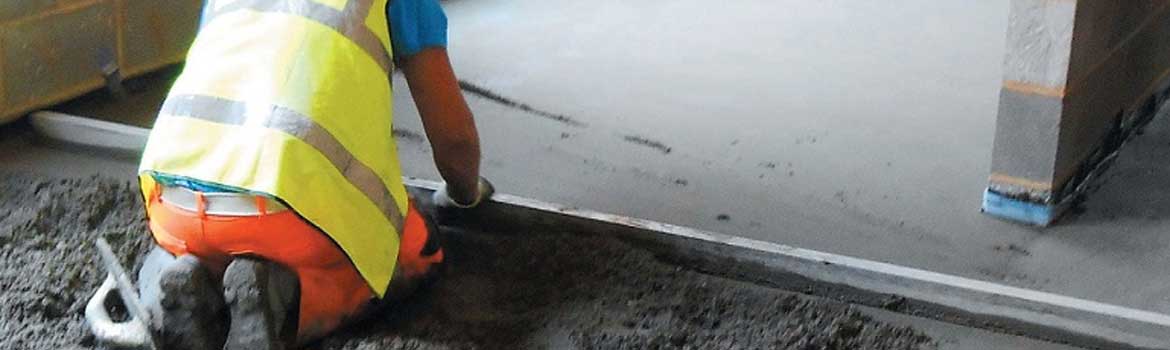
We offer a wide range of screed types and materials, including high-quality sand and cement floor screeds. Renowned for their strength and durability, these cement floor screeds are high-density, fibre-reinforced, quick-drying and polymer-modified – making them an ideal choice for a wide variety of projects.
A standard sand and cement floor screed is commonly used in residential housing, with fibres added to increase its strength, while higher-density screeds are ideal for garages and workshops. Polymer-modified screeds are used where reduced thickness is required, providing a durable solution without compromising performance.
Our quick-drying screeds are very useful when time is the critical factor. Typically, 5mm per day is the average drying rate. This means that these floors will be ready to receive their additional floor coverings much sooner.
If you are looking for a reliable floor screeding company for sand and cement floor screeds, why not give us a call on: 07990 676 464
We also install sand and cement floor screeds in Southampton, Camberley, Reading, Farnborough, Guildford, Woking, Bracknell, Horsham, Crawley, Portsmouth, Eastleigh, Winchester, Whitchurch, Andover, Salisbury, Fareham, Worthing, Slough, Newbury, Ascot, Aldershot, Leatherhead, Epsom, Weybridge, New Malden, Kingston upon Thames, Twickenham, Aylesbury, Maidenhead and High Wycombe.
Frequently Asked Questions
What is the difference between sand and cement floor screed and liquid screed?
Sand and cement floor screed is a traditional, strong and reliable choice, perfect for homes and heavy-duty areas like garages or workshops. Liquid screed is self-levelling and flows easily, making it ideal where speed and precision matter, such as underfloor heating.
Can you walk on sand and cement floor screed after 24 hours?
Light foot traffic is usually fine after 24-48 hours, depending on the thickness and conditions. Avoid heavy loads until the cement floor screed has fully cured to make sure it stays strong and durable.
Can sand and cement floor screed be used with underfloor heating?
Yes. A sand and cement floor screed mix works really well with underfloor heating, providing excellent thermal mass so your floor heats evenly and efficiently.
What thickness should sand and cement floor screed be, and should it be bonded or unbonded?
Standard sand and cement floor screed is usually laid at a minimum thickness of 50mm. Bonded screed sticks directly to the concrete slab for a solid, stable finish, while unbonded screed sits over a membrane and is better for thicker builds or where extra moisture protection is needed.
When can you lay tiles on freshly screeded sand and cement floors?
Tiles can be laid once the sand and cement floor screed has fully dried and cured. As a guide, cement floor screed typically dries at around 5mm per day, but it’s best to check moisture levels before tiling to ensure a long-lasting finish.